A ground robot’s usefulness depends on what happens after it reaches a customer. It needs integration, spare parts, trained maintainers and a way to receive changes without losing the record of its accepted configuration. Local production can support that arrangement, but a partnership announcement is only one step toward establishing it.
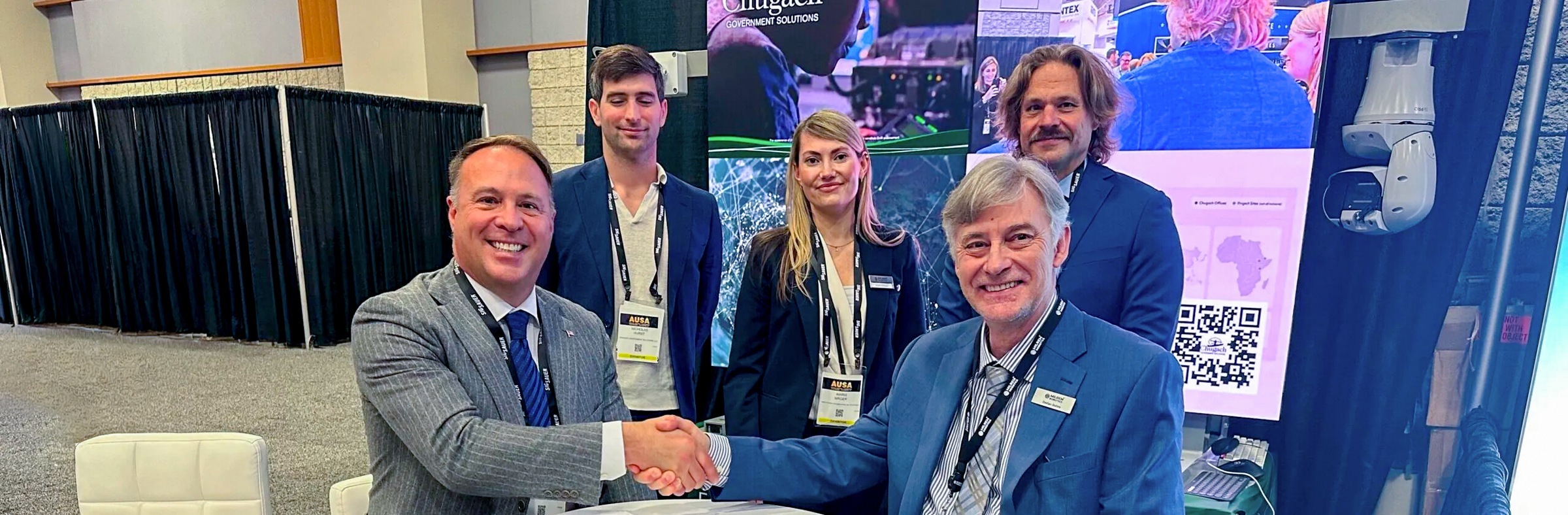
Milrem Robotics and Chugach Alaska Corporation announced an October 14 memorandum of cooperation at AUSA 2026 to explore U.S. production and support of Milrem’s unmanned systems. Chugach could become a preferred industrial partner for production, assembly, integration and lifecycle support. The stated scope includes U.S. customers, possible Foreign Military Sales and commercial dual-use work. The source describes an exploratory industrial framework, not an operating production line, an award to supply a named quantity or completed deliveries. Read the primary source account.
Industrial scope is broader than assembly
The proposed arrangement extends to configuring platforms for U.S. requirements, integrating equipment and training operators and maintainers. Those functions matter because a vehicle assembled locally can still depend on knowledge or components held elsewhere. A useful industrial partnership connects the authority to make changes with the ability to manufacture, inspect and sustain the resulting configuration.
The release links U.S.-based production with possible access through Foreign Military Sales. That is a proposed acquisition pathway, rather than evidence that a particular FMS case has been approved or funded. The distinction preserves the actual milestone: the companies intend to pursue opportunities together, while customer requirements and purchasing decisions still have to materialize.
Chugach’s existing engineering and federal-support activities supply context for the proposed division of work. They do not establish that every Milrem-specific manufacturing process is already transferred or that a robot produced in a new facility has passed acceptance. Industrial experience can reduce particular setup risks without substituting for the qualification of the actual product and process.
The receiving fleet needs a traceable configuration
For prospective customers, the immediate development is a clearer account of who might provide a domestic industrial and support function. That can make later discussions about integration, maintenance and training more concrete. It does not yet provide the delivery schedule, production rate or customer-level service record needed to compare an accepted offer.
A useful next-stage record would identify the agreed responsibilities for engineering changes, component sourcing and acceptance. If two organizations share production and integration, the customer needs to know which one confirms that a change remains compatible with the vehicle and its control software. This is an analytical implication of the proposed arrangement, not a claim about contractual terms that the companies have not disclosed.
Training also needs an outcome beyond attendance. Maintainers should be able to diagnose representative faults and restore an accepted configuration, while operators need to understand what the integrated vehicle can and cannot do. The memorandum’s inclusion of these functions is relevant because the support arrangement has to persist after the first demonstration or handover.
The production question should remain attached to demand. A potential local manufacturing base may create options before customers commit to a particular fleet. It would be misleading to treat the breadth of the proposed partnership as an order book or assume that every possible mission variant will be manufactured at the same rate. Announced scope and accepted production capacity are different measures.
The proposed lifecycle role is particularly relevant to changes after initial acceptance. A locally assembled vehicle may receive a different mission payload or software release later. A support arrangement needs to identify who can approve that change and maintain its documentation across the industrial partners. Otherwise the accepted factory configuration and the supported field configuration can diverge. The memorandum identifies the intended areas of cooperation, but a customer-specific agreement would be needed to establish those responsibilities for an actual fleet.
What would turn the framework into evidence
The longer-term contribution could be a more accessible and supportable route to ground robotics for U.S. and allied users. That depends on the companies defining the partnership, qualifying the work and delivering configurations that customers can sustain. The next decisive milestones are concrete industrial responsibilities, qualified production and accepted customer work, each reported separately from the memorandum that makes them possible.
Source organizations: Milrem Robotics, Chugach Alaska Corporation.
This analysis draws on the public sources linked in the text. Send corrections to [email protected].