A ground robot must be supportable after its demonstration team leaves. Parts, fuel, transport and repair time influence how much useful work it can perform as directly as navigation software. A vehicle that fits an existing maintenance system therefore has a different adoption path from one that requires a parallel supply chain, even when both can complete the same route.
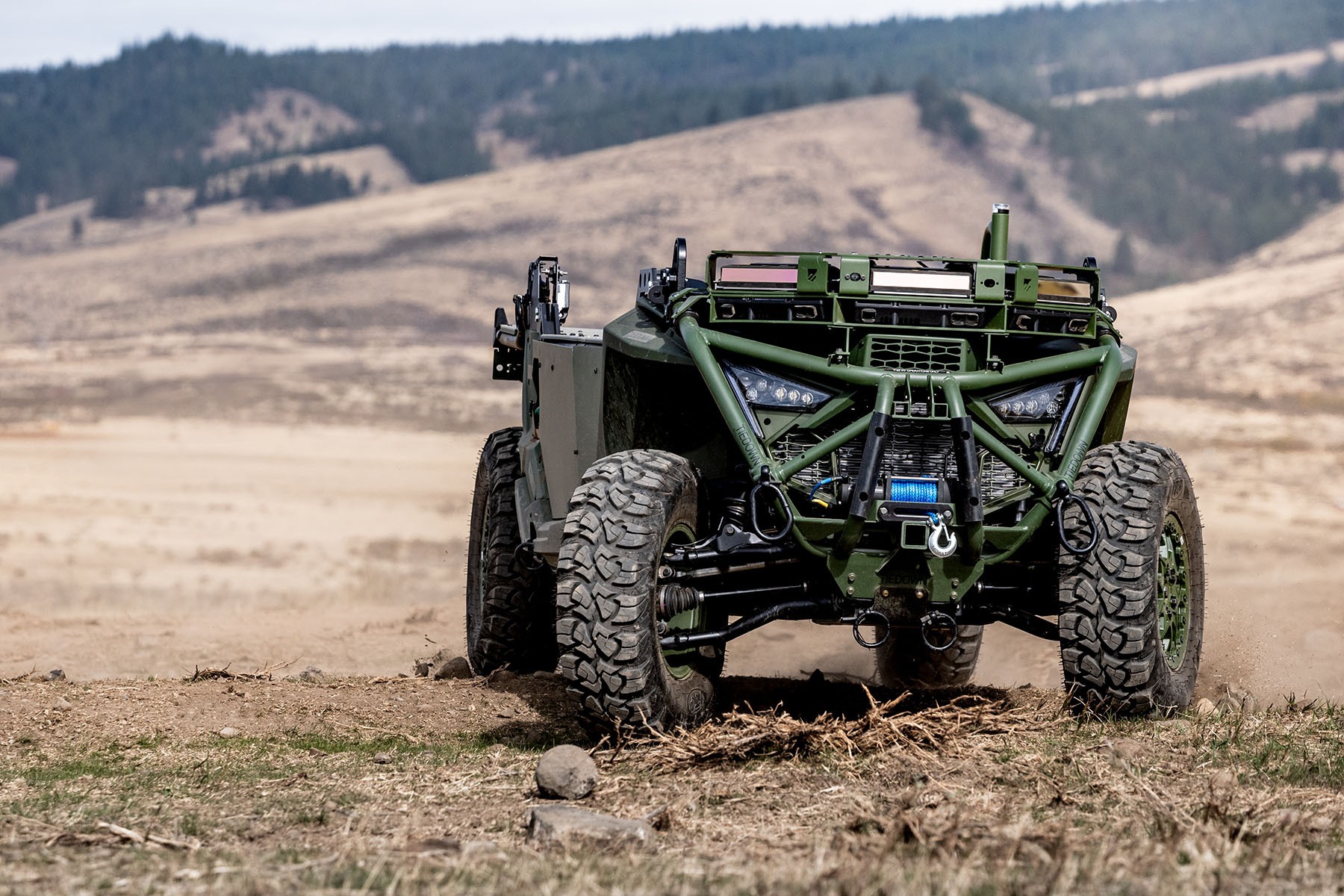
Overland AI’s October launch of IBEX describes an autonomous vehicle built on the Polaris MRZR platform. The company says the Marine Corps selected it for MADIS counter-drone integration and that it shares parts and fuel compatibility with the existing vehicle family. Published specifications include a 2,000-pound payload and 5 kW of export power. These are manufacturer statements, not independently measured results or evidence that a complete counter-drone configuration has entered service. Primary source.
Common hardware does not remove integration work
The practical question is what changes when the mission equipment is fitted. Added weight, power demand and maintenance access can alter the support burden. A useful acceptance plan would evaluate the actual configuration a unit expects to operate, rather than a lightly loaded mobility demonstrator. That distinction matters when a procurement decision rests on the claim that existing infrastructure will make introduction straightforward.
Common parts may reduce the number of new items maintainers must stock, but the autonomy equipment still needs its own diagnostics and repair arrangements. Operators need to distinguish a mechanical fault from a perception or software fault without relying on the development team. The important measure is time to return a vehicle to usable service, including the people and replacement equipment required.
Availability is the outcome to measure
A sensible comparison would track completed support tasks, recoveries, maintenance hours and days unavailable over repeated operations. Transport preparation and payload changes should be included because those activities consume time even when the vehicle is not moving. These are proposed evaluation criteria, not results reported for IBEX.
Compare the support burden fairly
Consider a hypothetical unit comparing a modified familiar vehicle with an entirely new robotic platform. The familiar vehicle might need fewer new mechanical spares but more specialist electronic support. The new platform might offer simpler access to its sensors while requiring a different parts inventory. Neither advantage can be inferred from the chassis name alone. The comparison needs the actual support package and a common operating schedule.
That schedule should include the unremarkable work between missions. Cleaning sensors, checking connectors, loading software and confirming a return to service all require time. If those tasks are performed by engineers during an exercise, their effort should remain in the accounting rather than disappearing when the results are summarized. Otherwise, a low apparent operator burden can conceal a larger supporting team.
Configuration control provides another useful test. A maintainer replacing a component needs to know whether calibration or a software change is required afterward. The procedure should establish who can release the vehicle for use and how the configuration is recorded. This is particularly important when mechanical commonality encourages the assumption that every repair follows the procedure for the original crewed vehicle.
The resulting evidence need not be a single headline percentage. A record of unavailable hours, recovery events and support interventions can be more useful because it shows where the system needs improvement. For IBEX, that kind of evidence would connect the company’s maintenance proposition to the actual experience of a unit responsible for keeping the vehicle ready over an extended period.
The broader significance is a shift from buying navigation capability to introducing a supportable autonomous vehicle. Familiar automotive infrastructure could make that transition easier. Evidence from sustained use, with the intended payload and ordinary maintenance personnel, will show how much of that advantage survives outside the launch demonstration.
Source and scope
Overland AI source announcement, 2026-10-07. Analysis published October 21, 2026. Company claims remain attributed; proposed evaluation criteria are editorial analysis, not independent test results.
What would change the assessment
The broader significance is a shift from buying navigation capability to introducing a supportable autonomous vehicle. Familiar automotive infrastructure could make that transition easier. Evidence from sustained use, with the intended payload and ordinary maintenance personnel, will show how much of that advantage survives outside the launch demonstration.
This analysis draws on the public sources linked in the text. Send corrections to [email protected].