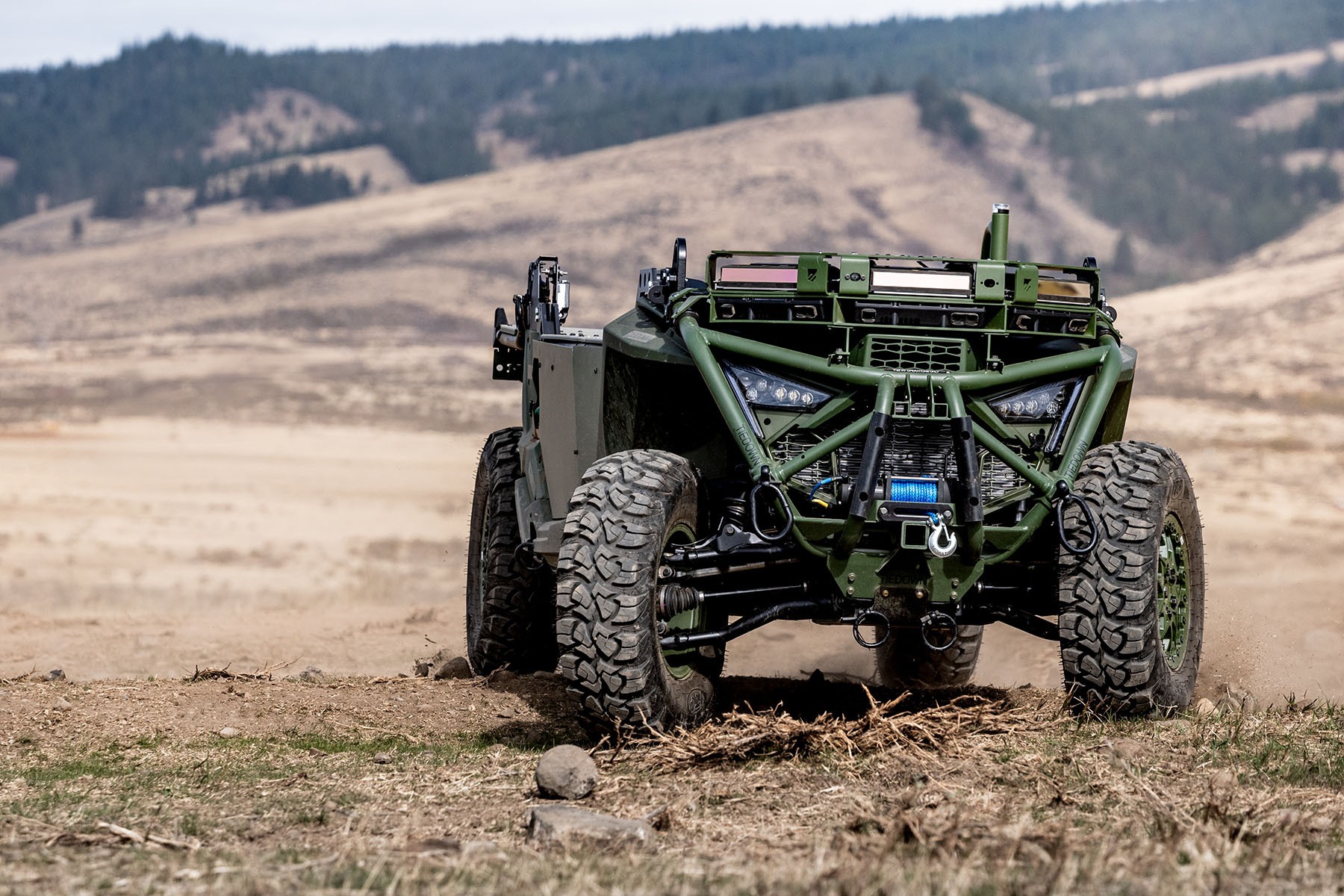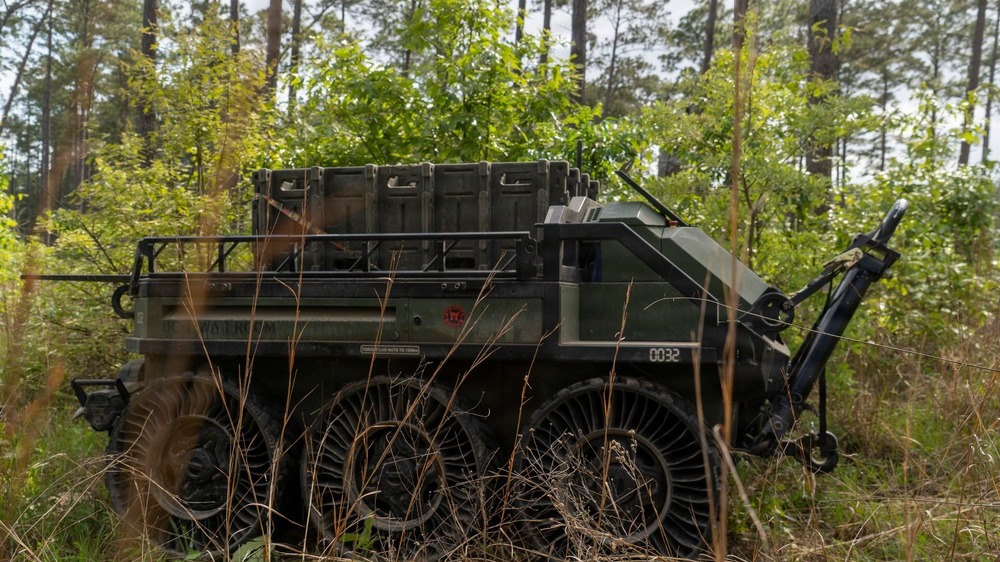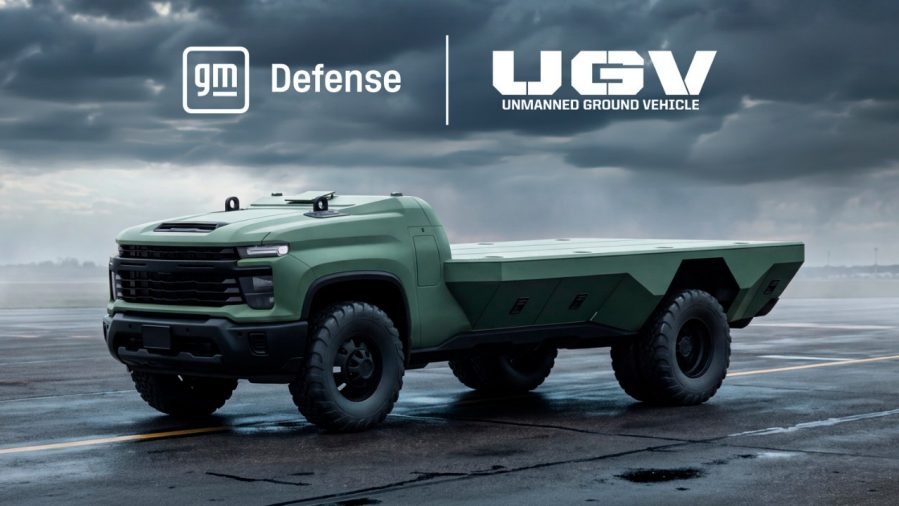
Adding another sensor or uncrewed teammate to a vehicle can also add another interface for its crew. The potential value of natural-language control lies in reducing that switching cost. The harder problem is making sure a brief instruction means the same thing to the person giving it and to every subsystem expected to respond.
On October 7, General Dynamics Land Systems and Primordial Labs announced a master teaming agreement to extend Anura natural-language command and control across GDLS vehicles. The release describes intent expressed as goals and constraints, with interaction through onboard systems such as sensors, displays and communications. It says Anura runs at the edge without cloud access. The announcement establishes a collaboration, not a completed fleet-wide installation or a published workload trial. Primary source.
Interpretation needs visible boundaries
For a crew, fewer menus would only be useful if the system makes its interpretation legible. An ambiguous instruction should lead to clarification, not an unseen assumption. A practical evaluation would test whether users can recognize what was understood, correct it quickly and return to familiar controls when conditions make speech unreliable.
The interface also needs to reflect the state of connected equipment. A request can be understood correctly while the relevant sensor is unavailable or another operator has control. The crew should receive a clear distinction between an accepted request, an action in progress and an action completed. Treating those as equivalent would make a simpler interface less informative.
Measure the crew’s entire task
Useful trials would compare task completion and error recovery with existing controls, including interruptions, unfamiliar users and changes to installed equipment. Counting button presses or measuring speech recognition alone would miss the cost of checking whether the right action occurred. Any claimed reduction in training should include the time needed to learn limitations and fallback procedures.
Test misunderstanding, not just successful commands
A demonstration that uses a prepared vocabulary can show that the interface works in a particular setting. A crew evaluation should also include a person changing their mind, referring to an object unclearly or interrupting a request. The question is whether the system exposes uncertainty and preserves the user’s ability to intervene, rather than whether it can produce a plausible response to every phrase.
There is also a distinction between remembering context and assuming authority. An interface may need earlier conversation to interpret a request, but that context should not silently authorize a different class of action. The user should understand when a request crosses a permission boundary and which confirmation is required. These are general design questions for mission systems, not a description of Anura’s undisclosed internal implementation.
Testing with representative crews could compare the time needed to notice and correct an error, not only the time to issue a command. It should also examine whether users become less attentive when the interface usually works. A smooth interaction can encourage overconfidence if feedback does not make limitations visible. Training needs to explain those limitations in terms operators can recognize during use.
Software updates create a final integration challenge. If an update changes how a phrase is interpreted, established crew habits may no longer produce the expected result. Versioned behavior, regression testing and clear change communication would therefore belong in the support plan. The value of a common interface depends on keeping it predictable as the set of connected capabilities expands.
The announcement does not provide an independent operational comparison with existing systems. Such a comparison would help establish the practical benefit for the intended user.
Edge execution can remove a dependency on remote connectivity, but it does not by itself establish reliable interpretation or safe integration. Those remain properties of the complete system and its operating procedures. Anura’s commercial opportunity is to make expanding vehicle capability manageable for people; the next evidence should show that crews retain understanding and control as that capability grows.
Source and scope
Primordial Labs source announcement, 2026-10-07. Analysis published October 21, 2026. Company claims remain attributed; proposed evaluation criteria are editorial analysis, not independent test results.
What would change the assessment
Edge execution can remove a dependency on remote connectivity, but it does not by itself establish reliable interpretation or safe integration. Those remain properties of the complete system and its operating procedures. Anura’s commercial opportunity is to make expanding vehicle capability manageable for people; the next evidence should show that crews retain understanding and control as that capability grows.
This analysis draws on the public sources linked in the text. Send corrections to [email protected].