Combining an aircraft, autonomy software and a defensive payload creates a new system that needs its own evidence. Experience with one component can reduce development uncertainty, but it does not automatically transfer to the combination. That distinction is central to assessing announcements about reusable defensive drones.
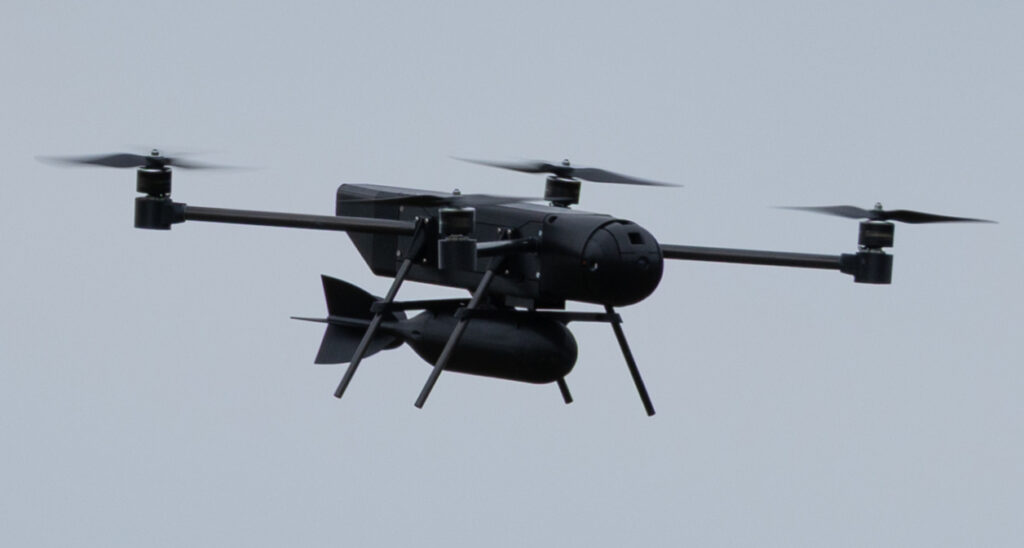
In their October 7 announcement, Palladyne AI, Federal Ammunition and Mossberg described joint development of SwarmShot. The plan starts with Gremlin-X and proposes later integration with compatible third-party aircraft. This article examines that development stage; it does not report a newly completed test or operational deployment. Read the original announcement.
Qualification belongs to the combination
A modular proposal can make future integration appear straightforward. In practice, compatibility has to include the aircraft’s behavior, the control system, the payload and the authorized operating process. A component’s earlier demonstration is relevant background, while acceptance of the combined configuration remains a separate milestone.
A useful development record would say which configuration was assessed and which functions were represented by substitutes. Simulation, a component trial and a complete-system evaluation answer different questions. Clear labels allow later results to add evidence without overstating what the first announcement established.
Human responsibility remains part of autonomy
Customers need a documented allocation of responsibility for authorization, supervision and stopping operation. A claim that software coordinates equipment does not explain the authority under which it acts. That authority also has to remain understandable when a system is maintained or reconfigured.
The near-term purchasing implication is to ask for qualification milestones and support responsibilities rather than infer readiness from the familiarity of the participating companies. A proposal may be technically plausible and still require substantial testing, training and approval before a receiving organization can rely on it.
Development milestones should remain distinguishable
An illustrative program review can separate requirements definition, component integration, controlled testing and customer acceptance. Moving through those stages may reveal a need to change the proposed design. That is part of development, rather than necessarily evidence that the program has failed. The important reporting question is whether later claims identify which stage has actually been completed and which remains planned.
A proposed third-party integration kit introduces another boundary. Compatibility might mean that a physical connection is possible, that software exchanges data, or that the complete configuration has passed an agreed evaluation. Those meanings should not be collapsed into one word. Buyers need to know which meaning applies to each named aircraft before treating a multi-platform proposal as a supported capability.
Sustainment deserves the same treatment. A reusable aircraft may need inspection, replacement parts, software maintenance and trained personnel before another use. A fair economic assessment includes those requirements and records the conditions under which they were measured. The announcement does not publish that complete accounting, so it cannot establish a comparative cost per successful defensive outcome.
The record should preserve human authority as a product requirement rather than leave it implicit in a demonstration. A receiving organization needs to understand how operation is authorized, how status is communicated and how an unexpected condition is escalated. These are high-level accountability questions for the complete product; they are not instructions for employing it.
The longer-term proposition is a repeatable qualification path for modular systems. If each new combination can inherit clearly defined evidence while receiving its own necessary checks, integration may become more predictable. If earlier component results are instead treated as universal certification, modularity could make the evidence harder to interpret. The next public milestone should make that distinction easier to see.
The partners assign different development responsibilities to ammunition, the airborne module and autonomy integration. That division makes the interfaces between organizations a relevant program milestone. A complete product needs a single intelligible acceptance record even when several companies supply its parts. The next update should explain how those responsibilities meet at qualification without implying that a partnership agreement itself completes qualification.
Interchangeability would need to be demonstrated
If the planned integration kit eventually supports several aircraft, its broader value would depend on repeatable acceptance without treating every platform as identical. The decisive evidence is a documented completed qualification for the actual integrated product, followed by clear limits for any additional configuration. The October release establishes a development direction, not that final result.
Source organization: Palladyne AI.
This analysis draws on the public sources linked in the text. Send corrections to [email protected].