Source chronology: Finals concluded November 13, 2026; DARPA results published November 16, 2026. Analysis published 24 November 2026.
RoboScout / University of Maryland: original source
Finding an injured person is only one part of helping a medic act sooner. A robot must also communicate the observation, explain its limits and fit the response team’s priorities. RoboScout’s victory in the DARPA Triage Challenge is meaningful because the competition places those technologies in demanding scenarios with human teams. It provides a stronger starting point than a tidy laboratory demonstration, while leaving a substantial transition from competition performance to dependable medical support.
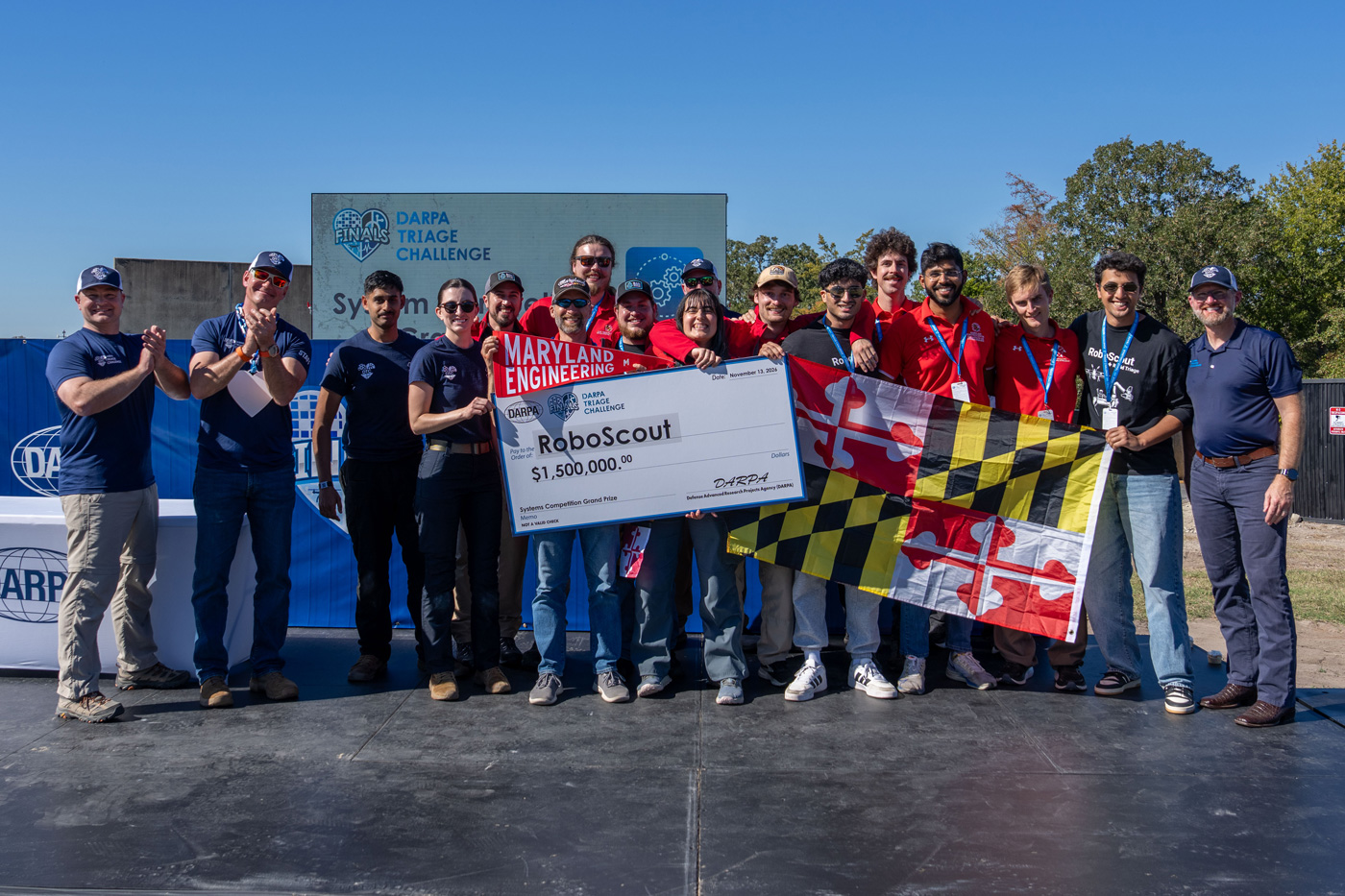
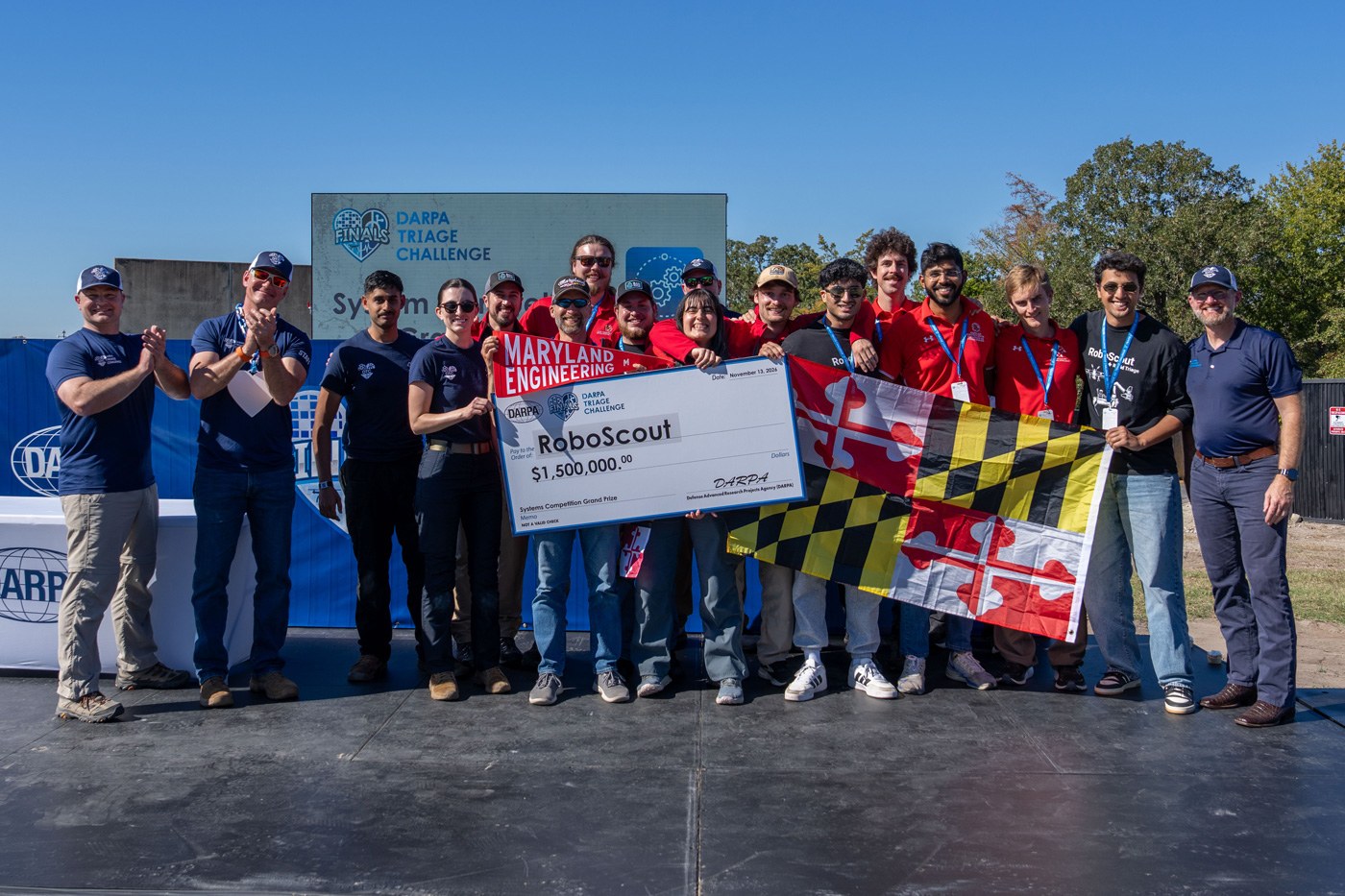
DARPA’s November 16 results name RoboScout the Systems competition winner after finals concluded on November 13 at Disaster City in Texas. The agency describes simulated catastrophic environments and separate awards for technical capabilities and data-based prediction. The result establishes the competition outcome. It does not establish clinical effectiveness in an uncontrolled disaster or authorize autonomous medical decisions.
A useful observation must survive the handoff
Standoff sensing can allow a team to begin assessing a dangerous area before a responder reaches every person. Its practical value depends on information quality and timing. An uncertain measurement arriving promptly may be useful if its limits are explicit. A polished but stale description can be harmful if a responder assumes it represents the person’s present condition. That makes timestamps and confidence in specific observations operational requirements.
The distinction between locating someone and assessing their needs should remain visible. These tasks have different failure modes. A robot may find an obscured casualty while failing to obtain a dependable physiological signal. An interface should allow the first useful result to be shared without silently turning the second task’s uncertainty into a definitive assessment. A single aggregate score can conceal that difference.
The competition’s use of multiple gates is therefore useful. It creates room to examine where a team succeeds and where a component still binds. But comparing systems also requires understanding the scenario, available equipment and human assistance. Results should be interpreted within those conditions rather than converted into an unsupported claim that a particular robot can replace a medic.
Follow the information into the response
A transition study should track more than how many people a platform detects. It should examine how quickly a medic receives a usable report, whether the report points to the correct person and what happens when the system cannot assess a condition. False reassurance deserves separate attention because it can be hidden by a generally successful search. Appropriate statements of uncertainty should also receive credit.
The strongest alternative explanation for a good competition result is specialized preparation for a known environment. That does not invalidate the achievement. It identifies the next test: unfamiliar layouts, altered lighting, incomplete communications and different response teams. Performance should be compared with the same team working without robotic assistance, including setup and recovery effort. Those measurements would make the claimed benefit easier to assess.
Sustainment matters as well. Sensors need checks, equipment needs transport and trained operators must recognize when conditions exceed the tested envelope. A response organization should know how quickly a failed component can be replaced and which functions remain available during degradation. Those arrangements can determine whether a capable system is usable on an ordinary shift.
RoboScout’s win is a credible achievement within a rigorous research competition. Our assessment is that the next evidence should follow the observation all the way to the medic’s decision, with errors and human workload preserved in the record. That would establish how the research result can become a dependable extension of a response team.