Combining an autonomy software company with a ground-vehicle manufacturer can shorten some integration conversations without settling the engineering questions. A vehicle, its payload and the software coordinating it still have to operate as a supported configuration. Ownership can give the participants more control over that work. It cannot by itself show that a new combination performs reliably, or that customers can maintain it under the conditions in which they need to use it.
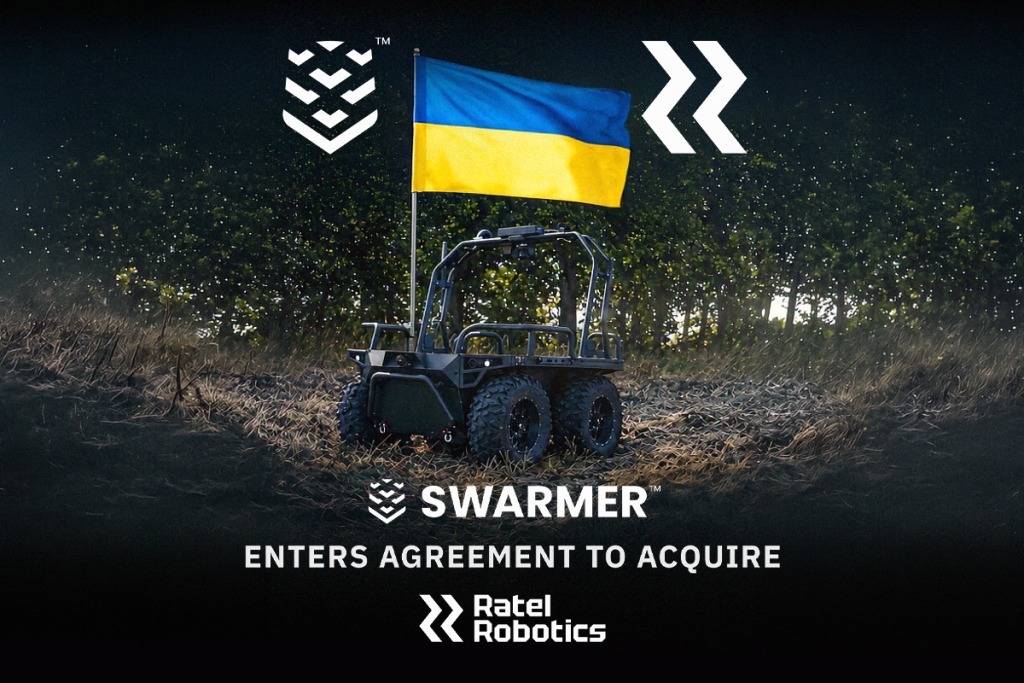
Swarmer’s September 10 announcement describes a definitive agreement to acquire Ukraine’s Ratel Robotics for cash and stock worth up to $224 million if all earnout milestones are met. Closing remains subject to conditions and required approvals. The release links Swarmer’s autonomy software with Ratel’s ground-vehicle portfolio, including logistics, evacuation, reconnaissance and other roles. This is analysis of the announced proposal, not a report that the acquisition has closed or that a combined configuration has passed a new operational evaluation. Read the primary source account.
A transaction is an integration opportunity
The proposal brings a software coordination layer closer to the hardware that must execute its instructions. That can help identify interface changes and prioritize support across the organization. The resulting benefit is conditional on how the teams actually work together. Separate products can share an owner while retaining different release processes, assumptions about communications and maintenance requirements. A useful integration record would show which of those boundaries changed and what the receiving customer can do differently as a result.
The upper purchase value also needs to remain attached to its conditions. An earnout is not the same as an immediate payment or a verified operating outcome. It can connect future consideration to milestones without establishing that those milestones will occur. Readers should therefore avoid using the headline maximum as a proxy for delivered capability, available production capacity or the financial resources committed to any individual vehicle program. The announcement’s transaction terms and its operational ambitions answer different questions.
Ground and aerial work have different constraints
The release describes an ambition to connect ground platforms and aerial assets. A common coordinating layer could help organize tasks across those domains, but it would need to preserve their different operating limits. A ground vehicle’s route, recovery requirements and payload state are not interchangeable with an aircraft’s endurance and return constraints. Treating every platform as an identical icon may simplify a display while hiding the information a supervisor needs to decide whether the proposed task is still feasible.
A receiving force would benefit from tests that identify the integrated configuration, the human authority retained and the work required when one participant becomes unavailable. Those tests should distinguish successful coordination from a manually prepared sequence that happens to finish. Neither outcome is described as a failure here. The distinction is necessary to understand what a demonstration or later acceptance result establishes. A joint system’s value depends on the actual handoffs, rather than on the sum of claims previously made about its components.
Support and production remain part of the case
Bringing hardware and software development together can make a field report easier to route to an accountable team. It can also increase the number of product versions that must be supported together. A repaired vehicle needs a compatible software baseline; a new autonomy release needs a clear list of tested configurations. Documentation, training and recovery procedures become part of the delivered capability. They should not be assumed to improve automatically because an acquisition gives the same company responsibility for more of the stack.
The near-term milestone is consequently the status of the transaction and a concrete description of any combined product work. The longer-term opportunity is a better-supported route from operational feedback to changes in hardware and coordinating software. Evidence of repeatable integration, maintained configurations and customer acceptance would strengthen that case. Until such evidence is available, the proposal should remain described at its actual stage: a conditional corporate agreement with an operational integration thesis, rather than a completed demonstration of the thesis itself.
Source organizations: Swarmer, Ratel Robotics.
This analysis draws on the public sources linked in the text. Send corrections to [email protected].