A bomb-disposal specialist should concentrate on the hazard, not discover that another robot’s controls behave differently. Interoperability therefore has a direct operational purpose: make equipment changes less disruptive while preserving a dependable way to act. QinetiQ’s TALON family raises that issue as it adds a newer generation. The wider significance is whether common interfaces support continuity for operators as equipment and payloads evolve.
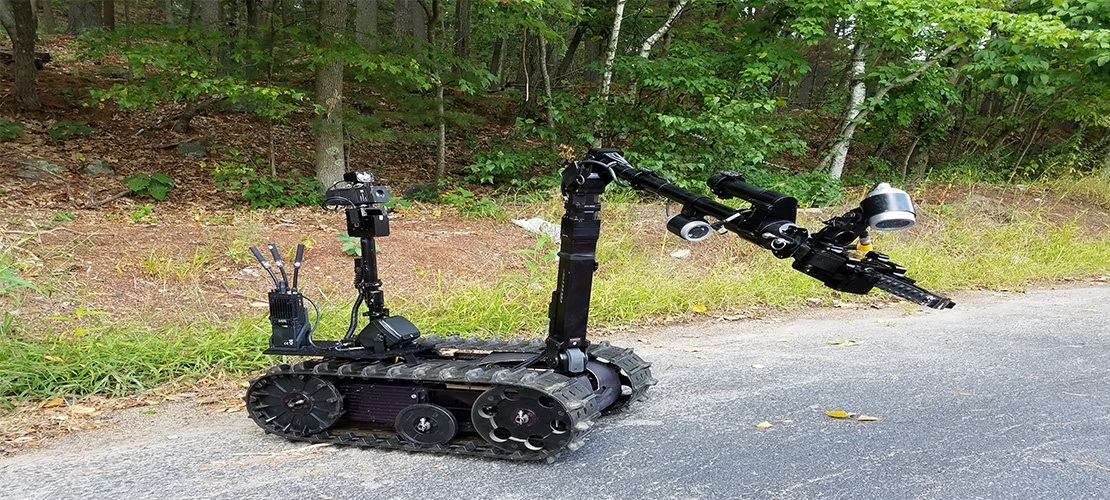
QinetiQ’s published source product description identifies TALON VI as its sixth generation and lists mapping, autonomy and open-architecture features. The Army’s May 2026 published source ODIN reference describes the earlier TALON 5 and interoperability-profile testing. These accounts concern different generations. They should not be merged into a claim that the newer system automatically passed the earlier tests or that every advertised autonomous function has independent operational validation.
Compatibility has several layers
An interoperability profile defines how parts of a robotic system communicate and behave at their interfaces. It can make exchanging a controller or payload more predictable. That does not make every combination safe or useful without further checks. Physical mounting, software versions, radio settings and operator understanding still need to align. A shared standard is a foundation for integration, rather than a substitute for proving the arrangement.
Our assessment is that the operator’s experience belongs in the test. A familiar command may have different timing or limits on another payload. A camera can use a common data format while presenting a field of view that changes how distance is judged. The meaningful outcome is that a specialist recognizes the configuration, understands its constraints and completes the task without hidden differences emerging during a hazardous approach.
Watch the footage
Official TALON VI launch film verified by YouTube oEmbed and QinetiQ official LinkedIn launch post. Earlier product-page video was unavailable; this is the supported replacement.
Video: QinetiQ · Original source ↗ · Video watch page ↗Bound autonomy by the specialist’s job
Mapping helps a robot or operator understand a space. Obstacle avoidance can reduce the effort of moving through it. Neither resolves the uncertainty of a suspected explosive item. The specialist still needs adequate imagery and control of the relevant tool. Automation is useful when it removes repetitive effort while retaining enough information for the person to understand and authorize the next action.
Consider moving beneath a vehicle to inspect an object. This is a suggested trial, not a reported TALON VI result. The robot should show where it is, preserve an understandable view and make automated movement limits clear. If imagery becomes obstructed, stopping and requesting another instruction may be preferable to continuing on a map. The trial should reward appropriate restraint rather than count every pause as a failure to progress.
A newer generation needs its own record
The sources establish family continuity and product claims. They leave open the newer system’s field acceptance, autonomous modes and representative performance. Procurement should ask which older accessories remain supported, which changes require retraining and what evidence validates new functions. That makes modernization more concrete than assuming a later model number guarantees a better complete workflow.
Support continuity matters alongside control continuity. Units need to know whether parts, batteries and diagnostic tools remain common and what happens when a mixed fleet contains multiple releases. Configuration records can keep the benefit of a common family while avoiding an informal collection of different robots. The practical industrial contribution of openness is a maintained ability to integrate and understand equipment over time. Contracts should identify the information needed to preserve that ability when a payload or supplier changes.
The compatibility record should be accessible to the specialist who actually configures the robot.
Common commands still need configuration awareness
A common control standard can simplify the connection between devices without making their physical behavior identical. Two arms may accept the same command yet have different reach, force and response time. Two cameras may send compatible video while producing different depth cues. The operator therefore needs both a familiar control arrangement and an unmistakable description of the active equipment. Interoperability is most useful when it removes avoidable setup work while keeping those meaningful differences visible.
This is particularly important for a mixed fleet. A unit may use older machines while acquiring newer ones, and may exchange payloads according to availability. Clear compatibility records would help the specialist avoid treating a familiar connector as proof of a supported combination. They would also help procurement offices decide whether a new generation preserves earlier investment. TALON’s broader relevance is continuity through change: retaining trained expertise and useful equipment while adding bounded new capability. That continuity should be judged through the specialist’s complete task and the maintainers’ ability to support it, rather than inferred from an architecture description or a generation number.
What would change the assessment
Keep TALON 5 tests separate from TALON VI claims and request the new compatibility record.
The wider impact
TALON’s larger relevance lies in making a specialized capability easier to evolve without sacrificing understanding. Standards and family continuity can help, but the gain has to be demonstrated at the task level. A dependable interface keeps the person focused on the hazard as the machine beneath the interface changes.
This analysis draws on the public sources linked in the text. Send corrections to [email protected].