Source chronology: November 23, 2026 announcement; planned launch in 2028. Analysis published 24 November 2026.
Satellite intelligence depends on obtaining the right observation at a useful time, then turning it into an interpretable result. Image detail is one part of that chain. Collection opportunity, calibration, downlink and analyst workload matter as well. Umbra’s Freetail announcement is significant because it presents a larger mission-capacity ambition alongside improved radar imaging. The research question is how much of that combined promise becomes a dependable service after launch.
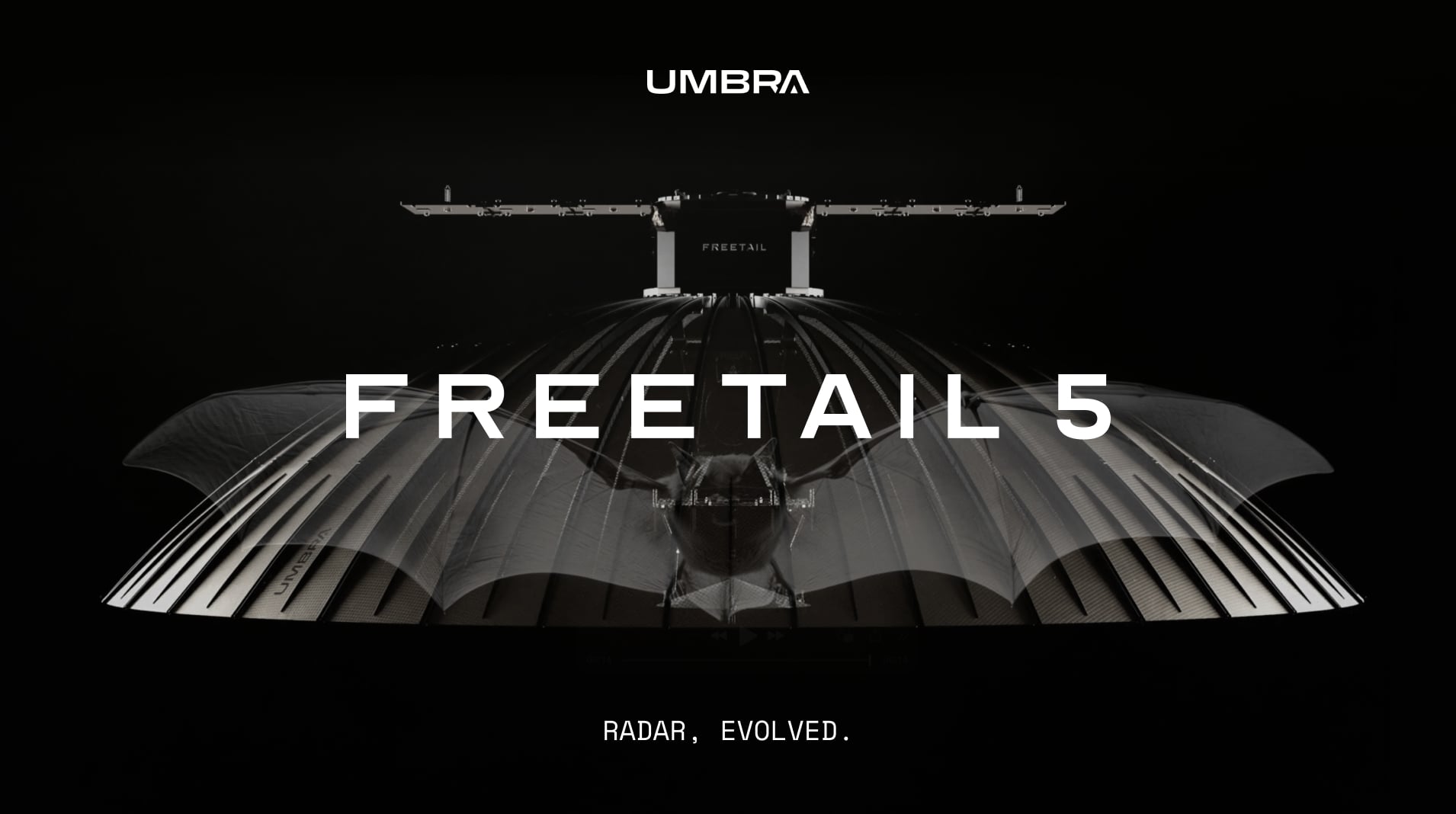
Umbra’s November 23 announcement introduces Freetail 5, a planned synthetic-aperture radar spacecraft using a five-metre antenna on a 200-kilogram-class platform. The company describes imaging as fine as five centimetres and a range of configurable missions. It says the first system is expected to launch in 2028. These are supplier design and schedule statements about a future platform, rather than measurements of an operational Freetail constellation.
Resolution and usable coverage answer different questions
A sharper image can help distinguish features that would otherwise blend together. It does not guarantee that a satellite will observe the relevant location at the required time or that every feature will be interpretable under the same conditions. Customers should assess the imaging mode, scene geometry and delivery deadline associated with a claim. A headline resolution is an incomplete description of the service.
The proposed multi-mission architecture creates another opportunity and another qualification burden. Software-defined capabilities can allow a spacecraft to support different requirements over its lifetime. But each mission needs an account of what the system measures, the applicable calibration and the conditions under which its result is valid. Reconfigurability is valuable when users can retain that traceability through changes.
This matters particularly for detecting change. A difference between two observations may reflect a physical event, an imaging-condition change or a processing choice. A useful product should preserve the acquisition context needed to assess those explanations. More frequent or more detailed collection can strengthen an analysis, but the relationship between the observations must still be understood.
An imagery customer should also track the time between a collection request and a usable delivered product. Resolution is only one part of that service. Tasking constraints, processing and delivery can determine whether a technically strong image arrives in time to support a decision.
Evaluate the complete observation service
The strongest case for Umbra’s approach is that designing the spacecraft, payload and software together can make tradeoffs easier to control. The strongest objection is that a versatile platform can face competing demands for power, collection time, communications and customer priority. A proposed feature list cannot establish how those constraints will be resolved during ordinary service.
A useful evaluation would connect a customer request to collection, processing, delivery and the resulting decision. It should include requests that could not be satisfied and explain why. Reporting only the best image from a successful pass would miss the availability question. The appropriate denominator is the set of eligible customer requirements under declared service conditions.
There is also a transition from a demonstrated component to an accepted product. Antenna deployment, pointing, calibration and ground processing must work together after launch. Early data should be compared against independent references where possible, with uncertainty and operating limits preserved. That would make it easier to assess whether the intended improvement is visible beyond selected examples.
Our assessment is that Freetail is a consequential architecture announcement with a clear future verification burden. The next milestones are hardware readiness, launch and independently interpretable on-orbit results. Sustained delivery against real customer requests will then show whether the spacecraft’s wider mission ambition improves usable intelligence capacity.