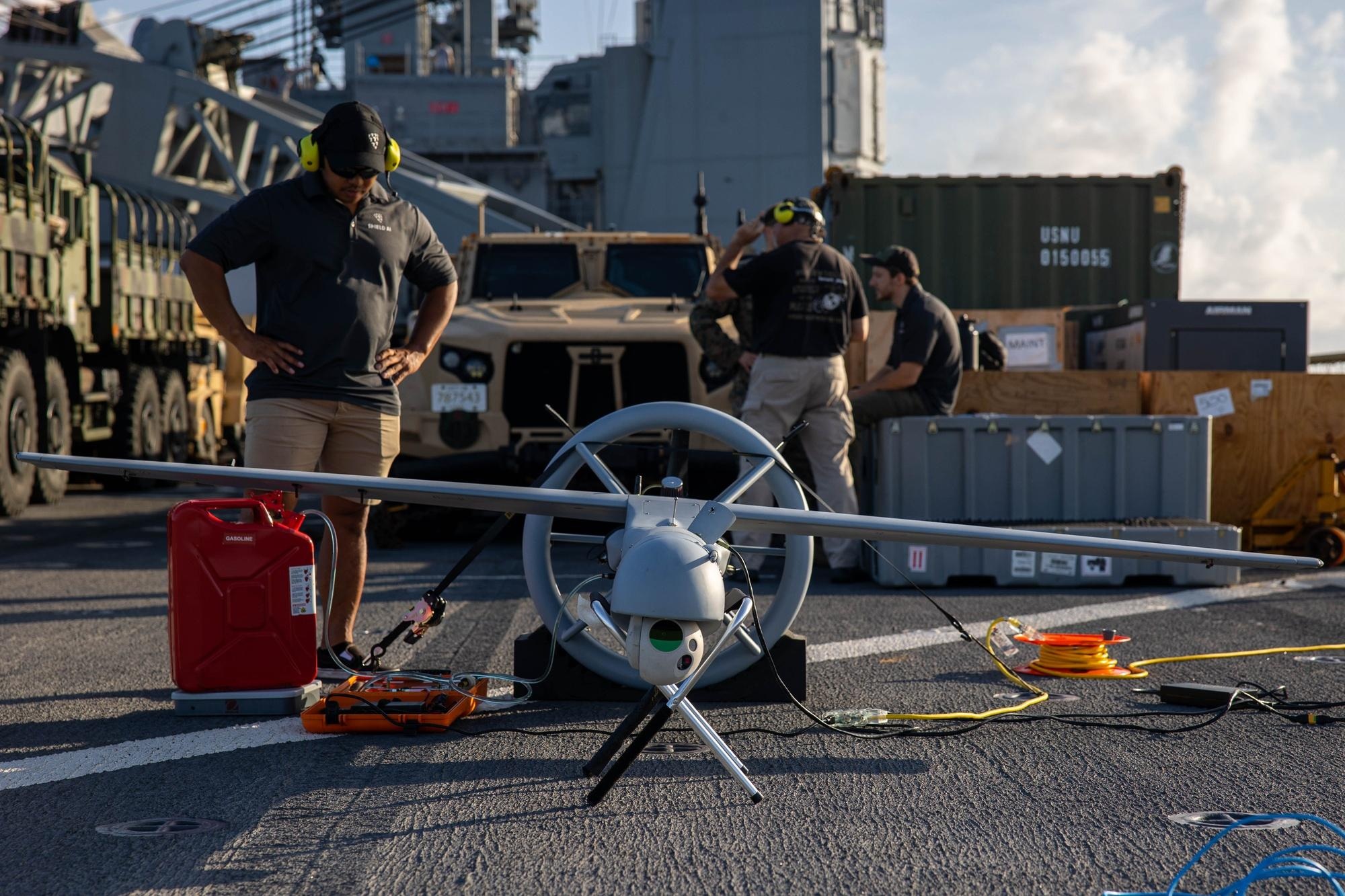
A commander needing surveillance usually cares about reliable information at the right time, rather than ownership of a particular aircraft. Buying a contractor-operated service can bundle the aircraft, crews and support needed to deliver that information. Shield AI’s V-BAT Navy services selection matters because it puts this operating model beside autonomy claims. The buyer’s central task becomes specifying and checking the outcome while preserving authority over how the service supports a mission.
Shield AI’s April 2026 published source account reports selection to compete for Navy intelligence, surveillance and reconnaissance services under a contractor-owned, contractor-operated arrangement. Its April 2025 published source Ukraine account reports more than 130 sorties. Both are company statements. The Navy selection creates eligibility for further orders, not a guarantee of the full headline amount. The Ukraine account documents the supplier’s claimed experience rather than an independent performance comparison across every operating condition.
A service changes who bears which burden
Contractor-owned and contractor-operated means the supplier provides and runs the equipment under the contracted arrangement. That can shift maintenance and routine staffing away from the customer. It does not remove those costs; it puts them within the service price and performance obligations. The customer needs to know which functions are included, what interruptions are acceptable and how quickly coverage can be restored after a fault.
Our assessment is that autonomy can make the service more efficient, but the contract should not assume efficiency from the software label. A mission still includes preparation, launch, collection, recovery and analysis. Some work may be automated while other work remains with the contractor’s people. The meaningful measure is how reliably the complete service delivers supported information, with its total cost and human requirements visible.
Sorties and useful intelligence are different units
A sortie count establishes flying activity. It does not establish how often the customer obtained a usable observation, how long the result took to arrive or whether a consequential event was missed. Those measures matter especially when conditions vary between missions. A customer should request results separated by the environment and task, rather than apply a favorable overall experience claim to every planned naval operation.
Consider a requested observation of a coastal area during a poor communications period. This is a proposed acceptance scenario, not a reported V-BAT outcome. The service should make clear what was collected, which gaps remain and how old the information is when delivered. If autonomy keeps the aircraft flying but the data cannot reach the customer in time, the aircraft has succeeded at one function while the contracted information service has not delivered the intended outcome.
Preserve the customer’s decision boundary
A contractor can supply information without owning the military decision that follows. Interfaces should retain that distinction, including task authorization and any limits on collection or distribution. The customer needs access to the relevant record of what was requested and delivered. A polished report should not obscure whether its underlying observation was direct, inferred or incomplete.
The public sources reviewed establish a service-market entry and the company’s experience claim. They do not publish the Navy’s task-specific performance results. The next useful evidence would link delivery orders to agreed service outcomes, including downtime, data latency and review effort. That would let buyers compare a bundled service with an owned fleet on terms that reflect the actual mission rather than the aircraft’s promotional specification.
A service must expose its delivery record
Buying a service also changes what the customer must be able to inspect. With an owned fleet, the unit can often observe equipment and staffing directly. With a contractor-delivered result, some of that work takes place within the supplier’s organization. The contract therefore needs evidence of coverage and gaps, plus access to the supporting records needed to understand a disputed outcome. A service-level promise is useful only when both parties agree how the result will be measured.
There is a further question about continuity. If another provider replaces the first, the customer should retain useful data, tasking history and a way to compare performance. Those arrangements can prevent an apparently convenient service from creating a new dependence on one interface or reporting format. V-BAT’s larger opportunity is to offer surveillance as a supported operational outcome, potentially reducing the effort a customer must spend assembling the fleet behind it. The payoff would be dependable information with visible limits and a sustainable price, while the force retains control over its mission and can judge whether the service remains the right way to obtain it.
What would change the assessment
Distinguish selection from delivery orders and vendor sortie claims from independent service performance.
The wider impact
V-BAT’s broader opportunity is to make aerial information easier to obtain without asking every customer to sustain another aircraft organization. The gain will be real when the service reliably delivers inspectable information within clear authority. Autonomy helps that result when it improves the whole workflow, beyond simply reducing interaction during flight.
This analysis draws on the public sources linked in the text. Send corrections to [email protected].